Paid for traffic. Sent people to a page. Watched them leave.
That’s the story behind a lot of underperforming campaigns, and it usually has nothing to do with the ad budget. It has everything to do with the page. The best sales funnel landing page tips are not about clever design tricks or trendy layouts. They’re about removing friction, making the offer obvious, and giving the visitor one clear next step.
If your landing page feels more like a brochure than a salesperson, it’s probably bleeding cash. Here’s how to fix that.
What a funnel landing page is supposed to do
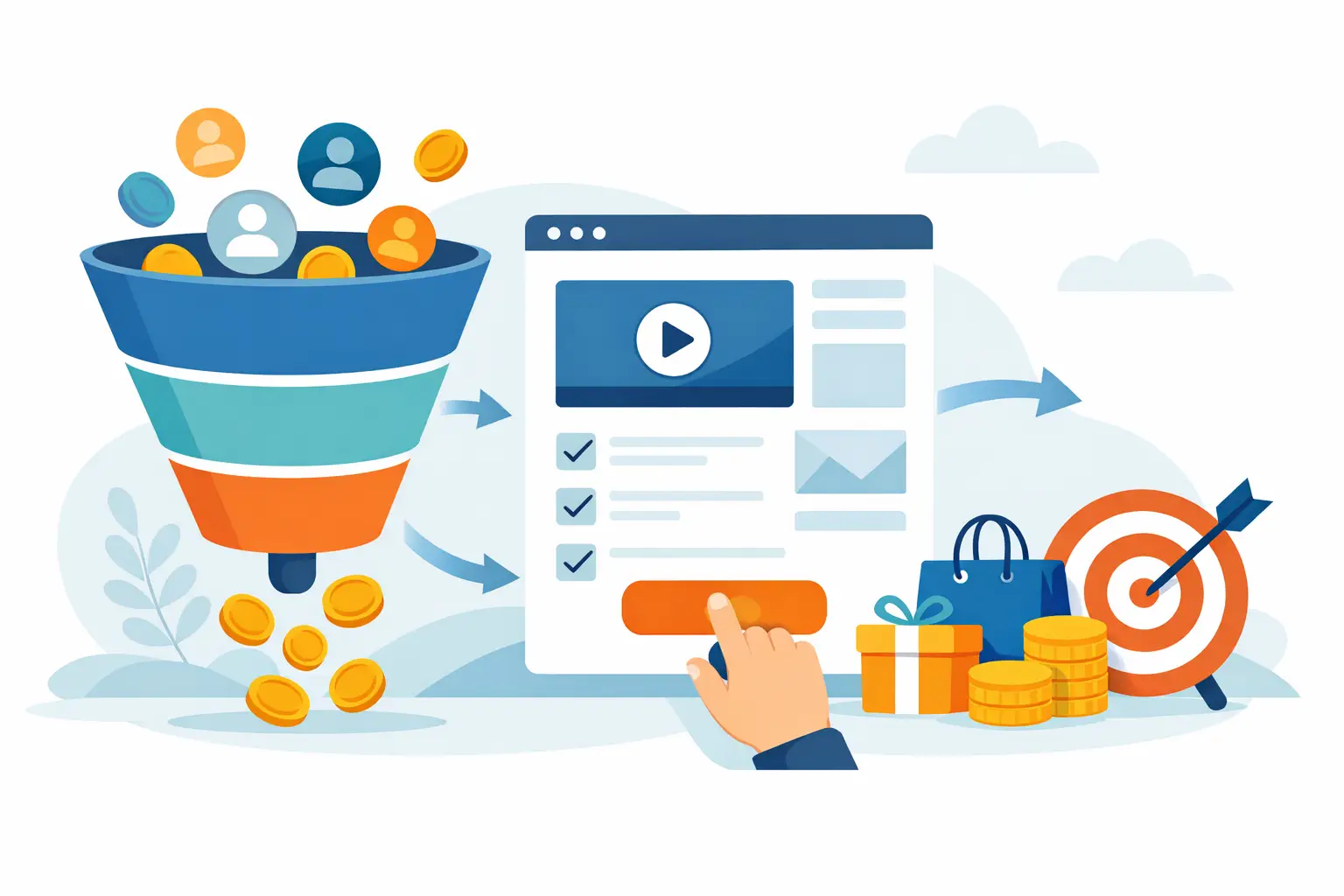
A landing page inside a sales funnel has one job – move the visitor to the next step. That might be booking a call, requesting a quote, downloading a lead magnet, starting a trial, or making a purchase. Not ten goals. One.
This is where many small businesses get stuck. They send campaign traffic to a page that tries to explain the entire business, showcase every service, tell the brand story, answer every objection, and act like a homepage at the same time. That creates hesitation. Hesitation kills conversion.
A strong funnel page narrows the decision. It matches the visitor’s intent, frames the offer clearly, and asks for a specific action. That sounds simple, but execution is where money is won or lost.
Sales funnel landing page tips that actually move revenue
1. Match the page to the traffic source
If someone clicks an ad about emergency HVAC repair, they should land on a page about emergency HVAC repair. Not your generic services page. Not your homepage. Not a page that makes them hunt.
Message match is one of the fastest ways to improve conversion. The headline, subheadline, offer, and call to action should feel like a direct continuation of the ad, email, or search result that brought them there. When the transition feels off, trust drops fast.
This is especially true for paid traffic. Every mismatch increases bounce rate and wastes ad spend. If you’re paying for the click, earn the next step.
2. Lead with a sharp headline, not a vague slogan
Your headline should answer the visitor’s first question: Am I in the right place?
“Welcome to Smith & Co.” is not a headline. “Get a Same-Day Roofing Estimate in Dallas” is. One is branding. The other is a conversion tool.
Good landing page headlines are clear before they are clever. They name the outcome, the offer, or the problem being solved. If you want personality, add it in the supporting copy. Don’t make the visitor decode what you do.
A simple formula works well here: what you offer, who it’s for, and why it matters now. That alone can outperform a polished but fuzzy brand statement.
3. Cut navigation if the goal is conversion
One of the most practical sales funnel landing page tips is also one of the most ignored: stop giving visitors easy exits.
A landing page is not a website tour. If the page exists to drive one action, top navigation often works against you. Every extra link is another chance for the visitor to wander off, compare, postpone, or disappear.
That does not mean every page should be stripped bare. It depends on the offer and traffic temperature. Cold traffic sometimes needs more reassurance, and certain services benefit from trust-building details. But even then, the page should still guide attention toward one primary action.
Think of it this way: a good landing page feels like a guided sales conversation. A cluttered one feels like being dropped into a crowded room and told to figure it out.
4. Make the call to action obvious and specific
“Submit” is lazy. “Learn More” is weak. If the button text could live on any website in any industry, it’s probably too generic.
Your call to action should tell people what they’re getting or what happens next. “Book My Free Consultation,” “Get My Quote,” “Start My Trial,” or “See Available Times” all set clearer expectations. Clarity reduces friction.
Placement matters too. Put a primary call to action above the fold, repeat it throughout the page, and keep the wording consistent. If your page asks visitors to “Book a Call,” then later says “Request Info,” then later says “Contact Us,” you’re creating unnecessary ambiguity.
5. Show proof before people have to ask for it
Visitors are skeptical, and they should be. Every landing page claims great results. Very few back it up well.
That’s where proof does the heavy lifting. Testimonials, reviews, client logos, short case study snippets, before-and-after outcomes, certifications, guarantees, and relevant stats all help answer the same question: Why should I trust you?
The key is relevance. A generic testimonial saying “great service” does less than a specific one that says, for example, “We increased booked appointments by 32% in 60 days.” Concrete proof lowers perceived risk.
If you serve local markets or niche industries, tailor the proof. A law firm wants to see legal credibility. A fitness studio wants to see member growth. A home service company wants to see reliability and response speed. Not all proof carries equal weight.
The mistakes that quietly wreck conversion rates
6. Ask for less on the form
Every field on a form is a tiny tax on action. Name, email, phone, company, budget, timeline, service type, favorite color – it adds up fast.
If the goal is lead generation, ask only for what your sales process actually needs at that stage. For many businesses, that means name, email, phone, and maybe one qualifying question. You can gather the rest later.
There is a trade-off here. More fields can improve lead quality in some cases, especially if your sales team is overwhelmed with low-intent inquiries. But most small businesses hurt themselves by asking for too much too early. Start lean. Add friction only if the data proves you need it.
7. Write like a buyer, not like an insider
A lot of landing page copy sounds like it was written to impress peers, not convert customers. It leans on jargon, internal terminology, and broad claims that feel polished but say very little.
Your visitor wants plain English. What problem do you solve? How does the process work? What result can they expect? Why should they act now instead of later?
Short sentences help. Specifics help more. “Custom digital growth solutions” is vague. “Landing pages built to turn ad clicks into booked calls” is clearer and stronger.
This is where many businesses get tripped up. They know their industry too well, so they stop hearing how unclear their messaging has become. If a first-time visitor cannot understand your offer in a few seconds, the page is doing too much work and winning too little business.
8. Build for mobile first, not mobile last
If your landing page loads slowly, hides the CTA, uses tiny text, or stacks sections in a confusing way on mobile, your funnel has a leak.
A huge share of traffic comes from phones, especially from paid social, local search, and email. Yet many pages are still designed on desktop and merely tolerated on mobile. That’s backwards.
Mobile-first means fast load times, thumb-friendly buttons, clean spacing, short forms, compressed images, and content hierarchy that still makes sense on a smaller screen. It also means making sure trust signals are visible without endless scrolling.
Pretty design that underperforms on mobile is expensive decoration. Performance matters more.
9. Test the offer, not just the colors
Button color tests get attention because they’re easy. Offer tests make money because they matter.
If a page is underperforming, the bigger issues are usually the headline, the audience fit, the call to action, the form friction, the offer structure, or the trust gap. That’s where testing should begin.
Try different hooks. Compare a free estimate against a free audit. Test shorter pages against longer ones when the sale is more complex. Experiment with guarantees, urgency, or scheduling formats. Sometimes a weaker page with a better offer beats a beautifully designed page with a mediocre one.
This is where a lot of business owners get frustrated. They tweak surface-level details while the core value proposition stays fuzzy. No amount of design polish can rescue an offer people don’t want or don’t fully understand.
What strong sales funnel landing page tips have in common
The best-performing pages usually share the same traits. They are focused, specific, fast, and built around buyer intent. They don’t try to say everything. They say the right thing at the right moment.
That’s a shift in mindset. Your landing page is not there to impress everyone. It is there to convert the right people. Sometimes that means using fewer words. Sometimes it means using more, especially for higher-ticket services where buyers need reassurance. It depends on the traffic source, the offer, and how much trust the visitor brings with them.
If you want a better benchmark, ask one hard question: does this page make taking the next step feel obvious and safe? If not, that’s the bottleneck.
A good landing page won’t fix a bad business. But it will stop a good business from wasting qualified traffic. And if your website is supposed to function like a customer acquisition system, that distinction matters a lot.
Fix the leak closest to the money first. Usually, it’s the page people land on.